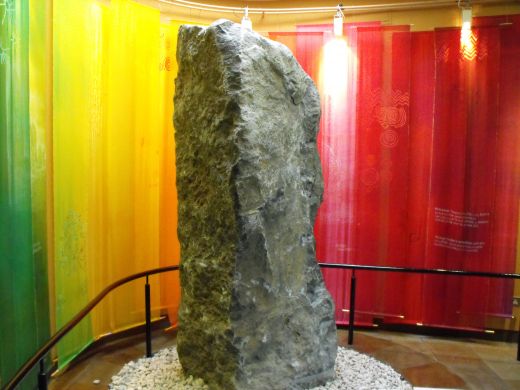
New Grange Review

Newgrange Meath Review

New Grange Review, Newgrange is a key part of Meath Heritage, it is an important historical site and one of the most visited tourist attractions in Meath, and Meath tourism promotes Newgrange all over the world as well as providing local tourist information outlets.

Recommended Accommodation Close to Day Tour vendors:

booknow

Newgrange Meath Heritage

As you enjoy a Staycation in Dublin, it is easy to visit historical sites in other neighbouring counties, for example, the world famous Newgrange and Hill of Tara are only a short bus journey from Dublin City. Spend a day visiting the many fantastic sites in County Meath and be back in Dublin in time to enjoy an evening of entertainment in one of our Traditional Irish Pubs.

newgrangepainting

New Grange Review

On Saturday, 13th July, 2013, I made my way for the first time in my life to the archaeological site in County Meath, Ireland, known as Bru Na Boinne (New Grange). Within this archaeological site there are three very important passage tombs the oldest of which Newgrange pre-dates the Pyramids in Egypt by over 1000 years. Such is the significance of New Grange in County Meath, Ireland, that the United Nations Educational, Scientific, and Cultural Organisation (UNESCO) designated the entire area known as Bru Na Boinne as a World Heritage Site. I have used the Google Translator to explain the above in some different languages.

New Grange Translations

Ar an Satharn, 5 Meitheamh, 2010, rinne mé mo bhealach don chéad uair i mo shaol ar an suíomh seandálaíochta i gContae na Mí, Éire, ar a dtugtar Brú na Bóinne. Laistigh den suíomh seandálaíochta tá trí tuamaí pasáiste an-tábhachtach ag an duine is sine a New Grange roimh na dátaí-an Piramidí san Éigipt le níos mó ná 1000 bliain. Is é sin an tábhacht na Nua-Grange i gContae na Mí, Éire, go bhfuil na Náisiún Aontaithe Oideachais, Eolaíochta agus Chultúir na hEagraíochta (UNESCO) ainmnithe an limistéar ar fad ar a dtugtar Brú na Bóinne mar Shuíomh Oidhreachta Domhanda.

newgrangemeath

Am Samstag, 5. Juni 2010 machte ich meinen Weg zum ersten Mal in meinem Leben, die archäologische Stätte in der Grafschaft Meath, Irland, als Bru na Bóinne bekannt. Innerhalb dieser archäologischen Stätte gibt es drei sehr wichtige Stelle Gräber von denen die ältesten New Grange vor der Zeit der Pyramiden in Ägypten von mehr als 1000 Jahren. Das ist die Bedeutung von New Grange in County Meath, Irland, dass die United Nations Educational, Scientific and Cultural Organisation (UNESCO) bezeichnet das gesamte Gebiet als Bru na Bóinne als Weltkulturerbe bekannt.

上周六的2010年6月5日,我为我的生命中第一次在米斯郡,爱尔兰著名的布鲁钠Boinne,考古现场的路上。在这个遗址有三个非常重要通道,其中最古老的坟墓新格兰奇预先日期超过1000年在埃及的金字塔的。这就是新田庄在米斯郡,爱尔兰,意义,联合国教育,科学及文化组织(教科文组织)指定的整个地区的布鲁钠Boinne称为世界遗产。

Larunbata ekaina 2010 5ean, nire bidea egin nuen nire bizitzan lehen aldiz egin Meatheko konderria, Irlanda, Bru Na Boinne izeneko web gune arkeologikoa egiteko. hau aztarnategiaren barruan, hiru pasarte oso garrantzitsua hilobi zaharrena horietatik New Grange pre-datak Egiptoko piramideak 1000 urteetan zehar. Hala nola, New Grange garrantzia County Meath, Irlanda, da, Nazio Batuen Hezkuntza, Zientzia eta Kultur Erakundea (UNESCO) izendatutako Bru Na Boinne bezala ezagutzen Gizateriaren Ondare bezala, eremu osoa duten.

Le Samedi 5 Juin 2010, j’ai fait mon chemin pour la première fois dans ma vie pour le site archéologique dans le comté de Meath, en Irlande, connu sous le nom Bru na Bóinne. Dans ce site archéologique, il ya trois passage très important tombes dont les plus anciennes New Grange avant les dates des Pyramides en Egypte par plus de 1000 ans. Telle est la signification de New Grange dans le comté de Meath, en Irlande, que l’Organisation des Nations Unies pour l’éducation, la science et la culture (UNESCO) a désigné toute la région connue sous le nom Bru na Bóinne comme site du patrimoine mondial.

newgrangehistoricalsite

Pada hari Sabtu 5 Jun 2010, aku berjalan untuk pertama kalinya dalam hidup saya ke laman web arkeologi di County Meath, Ireland, yang dikenali sebagai Bru Na Boinne. Dalam halaman arkeologi ini ada tiga bahagian yang sangat penting makam tertua yang Baru Grange pra-tarikh Piramid di Mesir oleh lebih dari 1000 tahun. Itulah pentingnya Grange Baru di County Meath, Ireland, bahawa PBB untuk Pendidikan, Ilmu Pengetahuan, dan Budaya Organisasi (UNESCO) yang dilantik oleh semua kawasan yang dikenali sebagai Bru Na Boinne sebagai Tapak Warisan Dunia.

El sábado 05 de junio 2010, me dirigí por primera vez en mi vida a la zona arqueológica en el Condado de Meath, Irlanda, conocido como Bru Na Boinne. Dentro de este sitio arqueológico hay tres tumbas paso muy importante la más antigua de New Grange, que es anterior a las Pirámides de Egipto por más de 1000 años. Tal es el significado de New Grange, en el condado de Meath, Irlanda, que las Naciones Unidas para la Educación, la Ciencia y la Cultura (UNESCO) designó el área entera conocida como Bru Na Boinne como Patrimonio de la Humanidad.

New Grange Location

The site known as Bru Na Boinne is a short distance from a number of key locations, best known of which would be Slane village in County Meath, famous for its annual concerts at Slane Castle. I have highlighted Newgrange as it is the best known and largest of the passage tombs within the Bru Na Boinne area, however, there are two further large passage tombs known as Knowth and Dowth. The reason this area is known as Bru Na Boinne is due to a spectacular bend in the River Boyne that runs close by, Bru Na Boinne meaning in Irish, the Palace or Mansion of the Boyne.

I brought my digital camera with me on my visit to Bru Na Boinne and I have tried to capture as much of the experience as possible from the moment of arrival to the moment of exit. I have taken a great many photographs and so have only displayed some here due to the time it takes to up load pictures. I hope my pictures help you to enjoy the Newgrange experience from a distance; however, I would have to say that only a visit will truly quench your thirst for knowledge and a sense of history.

I arrived at the car park of the Bru Na Boinne Visitor’s Centre early as I was told by staff when I phoned on Friday that due to the good weather it could be busy. At 9am there were already some cars in the car park and people, more prepared than I, were rubbing sun cream on, placing wide brimmed hats on their heads, open sandals on their feet and various models of shorts adorned their legs, I was of course in short sleeves and jeans. As I made my way to the Visitor’s Centre, which is clearly sign posted, I was immediately excited by the long winding, rustic walk way that was cobbled with Indian sand stone and covered over by a solid timber trestle. Along the walk way some large rocks are placed in order to give the visitor a taste of what might lay ahead.

newgrangemeath

As I approached the Visitor’s Centre which is about one hundred metres from the car park, I could see a modern day rock and water feature that again showed how much care and attention to detail has been paid by those who opened up this area so that it could be shared by people from all over the world. Upon entering the Visitor’s Centre I was immediately greeted by friendly and helpful staff, I knew exactly where and when I was supposed to go in order to get the full benefit of my time at Bru Na Boinne.

The Visitor’s Centre has an exhibition some of which I have captured in pictures for you, it is an excellent exhibition and it really does take you back in time. It is so easy to imagine how people lived 5000 years ago. Contrary to much public myth these people were not savages; they were in fact architects, builders, astrologists, artists, farmers and much more, we know this from the vast amount of archaeological material found at Bru Na Boinne.

A video in different languages is shown at the Visitors Centre at regular intervals. Bru Na Boinne Visitor Centre interprets the Neolithic monuments of Newgrange, Knowth and Dowth. The extensive exhibition also includes a full scale replica of the chamber at Newgrange as well as a full model of one of the smaller (satellite) tombs at Knowth. All admission to Newgrange is through the visitor’s centre and visitors are taken to Newgrange and Knowth by shuttle bus, it is all very well organised and streamlined.

Having viewed the exhibition I then made my way to the tourist information area to collect literature about Bru Na Boinne and other sites of importance in the area. Some gifts and craft work can also be purchased. There is a very pleasant and well laid out café area which serves meals, sandwiches and soft drinks. However, you may also bring your own food and drinks if you wish, which can be enjoyed in the many seated areas around the Newgrange and Knowth sites. It was then time for me to make my way along a short picturesque walk way to board the shuttle bus for the passage tomb known as Knowth. The walk way takes you along a winding path and over a cable suspended bridge that hangs over the River Boyne.

New Grange Bus

The shuttle buses leave every fifteen minutes and you are designated to a particular bus by time. A small stick on badge is issued to you so that there is no confusion, if your badge says 9.30am you will join twenty-three other persons on the 9.30am bus, there is no confusion, then 9.45am and so on. The ticket that I had purchased at the visitor’s centre allowed me to visit both Knowth and Newgrange for 11 Euro. If 11 Euro is all you wish to spend then that is all your day at Bru Na Boinne will cost you. The comfortable shuttle bus ride takes only a few minutes to Knowth.

New Grange History

Upon arrival at Knowth you dismount the bus; you then have a few minutes to enjoy the scenery before being taken by a tour guide to the passage tomb and surrounding area. The tour guide is informative, knowledgeable and clearly passionate about the subject under consideration. Knowth is at the western end of the Bru Na Boinne area. 127 kerbstones surround the main passage tomb at Knowth, however, there are also at least eighteen smaller tombs dotted around the main tomb, two of these smaller tombs were built before the main passage tomb. These kerbstones are massive some with a weight of ten ton and more, when one is told that these stones were brought here 5000 years ago by pure man power, it is breath taking. You can see from my pictures of the exhibition how it has been suggested that these stones were moved across land.

meathsunset

In 1967/68 Professor George Eogan and his team of archaeologists discovered two of the tombs within the large central mound, one of the features of which is the great wealth of decoration on the structural stones. Ceremony and settlement existed at Knowth both before and long after the end of the Neolithic period. The guided tour of Knowth sets out the many epochs in Knowth’s complicated history. It highlights tremendous examples of Neolithic art and examines many possible interpretations of their meaning. There are standing stones and settings of what would be considered exotic stones outside the entrance of the tombs. A Timber Circle has also been reconstructed in a way that archaeologists believe it may have previously existed. This timber circle has been carbon dated to a time approximately 2,500 years BC. This wooden circle appears to have been a place for ceremony or indeed worship, there is no proof either way so it is up to each individual’s interpretation. It does however dominate the eastern side of the site at Knowth.

New Grange inside the tomb

Inside the mound at Knowth visitors are allowed to take pictures, you are not allowed to take pictures inside the passage tomb at Newgrange. I have taken some pictures of the passage tomb in Knowth and I hope that you can see the incredible work and expertise that went into creating these passages over 5000 years ago. Inside the mound a room has been specially designed to allow visitors an opportunity to view the passages and also a huge ditch exists which was most likely dug out in early Christian times. There also remain on the Knowth site foundations of an early Christian house as well as many souterrains, of course the Christians came long after Knowth was constructed.

New Grange Guided Tour

Following the guided tour at Knowth we were able to walk around the site at our leisure taking pictures and enjoying the incredible view. It is easy to understand why many people through many epochs chose this site to live, work and die; it is not so easy to understand what the people who lived here 5000 years ago were thinking about, their wonderful carvings on solid rock, their mastery of archaeology, structure and farming show that these were an intelligent, artistic and creative people who lived as one with mother earth. I try to imagine these massive rocks being ferried by wooded raft along the coast, up the BoyneRiver and then man handled up the slopes of Bru Na Boinne, what an incredible people. Today we call ourselves advanced and modern, yet compared to these people who had nothing but wood and stone, and who lived at one with nature, we may be everything but.

New Grange Visitors Centre

Having taken lots of pictures and enjoyed a can of coke on the slopes of Knowth it was time to return to the Visitor’s Centre and prepare for the next short journey to the largest of the passage tombs at Newgrange. The shuttle bus drops you back to the centre and you are given clear instructions as to when your shuttle will be leaving for Newgrange, you have your time sticker on your jumper just in case you forget. This system of stickers may seem childish and unnecessary, however, it is to the contrary, everyone knows exactly where they are going and when, so there is no pushing and shoving for places on the bus or in the tours of the tombs.

As I have said earlier Newgrange is the largest and the best known of the passage tombs, the reason Newgrange is known worldwide is due to the winter solstice phenomenon. Newgrange was excavated between 1962 and 1975 by Professor M.J. O’Kelly who discovered the Roof Box through which the mid-winter sun penetrates into the inner chamber. This is a truly magnificent mystery as the exact location of the box only allows the sun to penetrate for 17 minutes each year, what an incredible construction for a people over 5000 years ago. Professor O’Kelly also, some would say, controversially, designed the reconstruction of the white quartz façade that is to the front of this massive passage tomb. Unlike the site at Knowth where the quartz was left on the ground possibly depicting a court yard or place of offering, Professor O’Kelly believed that the quartz had been a retaining wall that had fallen down over millennia.

New Grange View

From the site at Newgrange one can see the site at Dowth that remains open to view externally only; one can also see the bends and twists of the River Boyne in the valley below. It is easy to imagine why an ancient people would view this area as prime real estate. The significance of the 5000 year old entrance stone and roof box are explained by the tour guide as we make our way into the 5000-year-old passage tomb. When we make our way to the inner chamber the winter solstice phenomenon and burial ritual are explained. Following the guided tour we are again let loose with our cameras and imagination, Newgrange is surrounded by 97 kerbstones, the size of the stones, especially when one considers how they were brought here are impressive to say the least. The mound covers a single tomb consisting of a long passage and cross shaped chamber. There are the remains of two smaller tombs immediately to the west of Newgrange and at least one and probably two to the east.

New Grange Landscape

The landscape and view here are second to none, the maintenance and restructuring of the site are done with due diligence. To see the inner chamber of the Newgrange tomb that was built from massive rocks and sealed with grass sods, yet has remained water proof for over 5000 years, is an experience to be hold. How many of us have seen modern ‘marvels’ built and demolished in our own life times. Dowth is not as well known as Newgrange and Knowth, however, it is just as significant from an archaeological perspective. The mound at Dowth has 115 kerb stones and has two tombs facing westwards. There are also smaller satellite tombs to the east and south-west of the large mound. Like Knowth, Dowth appears to have been a focus of activity in the first millennium AD.

The area of Bru Na Boinne has an incredible history and one is touched by a sense of spiritually and historical awareness by visiting the site. Our forefathers were much more than hunter gathers, they were, from the evidence presented at Bru Na Boinne an intelligent, artistic, creative people who lived at one with the land and the environment. I could write all day about these wonderful people, however, I think my pictures should give you a clear understanding of how wonderful our forefathers really were. At 12.30pm it was time to get the shuttle bus back to the Visitor’s Centre, where I enjoyed some refreshments in the café. This was a great day, a great experience, the entire journey through five millennia took about three and one half hours, and it is a journey back in time not to be missed.

New Grange conclusion

I finished my day out by travelling the short distance from the Visitor’s Centre to the village of Donore, where I enjoyed an excellent lunch in Daly’s Pub for the reasonable sum of 10 Euro. The beef, vegetables, potatoes and other fine foods are locally sourced and the meal gets a five start rating from me, five star being the highest merit. *****

Posted in New Grange Review | Tagged , , , , , | Comments Off

Meath heritage

Meath Heritage

Meath heritage is written into Meath History with many Tourist attractions mapped out, there are many Tourist information centres in Meath such as at Newgrange one of many historical sites, historical graveyards, round towers, to be found in County Meath.

Recommended Accommodation Close to Day Tour vendors:

booknow

Newgrange Meath Heritage

When you stay in Dublin, it is easy to visit historical sites in other neighbouring counties, for example, the world famous Newgrange and Hill of Tara are only a short bus journey from Dublin City. Spend a day visiting the many fantastic sites in County Meath and be back in Dublin in time to enjoy an evening of entertainment in one of our Traditional Irish Pubs. This article deals with the less well known, yet equally important, Donaghmore Church and Round Tower just outside Navan, in County Meath (a 40 minute journey from Dublin).

newgrangepainting

Donaghmore Church and Round Tower, County Meath, Ireland.

The Church and Roundtower at Donaghmore in Meath is one of the finest examples of the many remaining Round Towers in Ireland. This Tower is situated in County Meath (The Royal County). It is called the Royal County as many of Irelands Clan/Tribal leaders lived in Meath over the centuries, Newgrange and the Hill of Tara and many other historical sites in Meath can be traced directly to ancient Kings and leaders in Ireland.

donaghmoreroundtowerpainting

The Donaghmore Church and Round Tower are situated outside Navan in County Meath, and both are maintained by the Office of Public Works. If it were not for the efforts of the OPW many beautiful buildings such as this Round Tower would be lost to the wilderness, this historical and spiritual site is at its most glorious at Dawn. It is in the early hours as the morning dew evaporates to the pulsating beat of the piercing sunrays that the souls of our forefathers rest easy. As the morning mist lifts across the Boyne Valley it unveils the beauty of time, the sounds of history are punctuated by the piercing call of the many wild birds of prey that still dominate the skies over the Royal County.

Birds of Prey Meath

Here in Ireland there is fossil evidence of an interaction between man and the goshawk. Remains were found in Mount Sandel in Colerainec-7,000 BC, Newgrange in the Boyne Valley in Co. Meath -2,000 BC and Dalkey Ireland in Dublin – 3,000 BC. The earliest known reference to falconry in Ireland is in the Irish text ‘The Life of St. Colman’ in the 12th century. In this, the King of Tara is described as having ‘da seabhac seiga’ or two hunting hawks.

Monastery of Saint Patrick

It was on this Donaghmore site that a Monastery was founded in the 5th Century by Saint Patrick, the Patron Saint of Ireland. You may have heard of St Patrick due to the world wide celebration by Irish people of St Patrick on the 17th March each year.

Ireland’s Saint Patrick placed the Church at Donaghmore into the care of Saint Cassan. St Cassan’s body is venerated here. The Round Tower was not built until the 11th or 12th Century. It is well preserved, but its upper part was badly restored in 1841. The Four windows which normally face north, south, east and west from the top of the round towers are not found here. And the stone at the top of its roof is missing.

donaghmorechurch

Originally the Tower had wooden floors which were connected by ladders. The door way which is placed at height above the ground level, dates from the 12th Century but it might not be original. It has carved surround with a crucifixion, with strangely twisted legs on the key stone, and a head facing outward from each of the jambs.

Next to the Tower are the remains of a small 16th century Church. County Meath is rich in heritage and culture. Meath is famous around the world for its historic sites, this Round Tower and Church would be less well known compared to New Grange and so forth.

donaghmorechurchandtower

There is no charge to visit this site. There is free car parking at this site of the Round Tower and Church. And if you feel like a good walk it is only a few minutes from Navan Town which is the capital of County Meath.

Posted in Donaghmore Church and Round Tower, Meath heritage | Tagged , , , , , , , | Comments Off

John Calder, The Theology of Samuel Beckett and The Garden of Eros

The Theology of Samuel Beckett and The Garden of Eros

John Calder has written The Theology of Samuel Beckett and the Garden of Eros. France has a capital city, Paris, and Paris changes less than other major cities. The meeting places where intellectuals find themselves may change, from Montmartre to Montparnasse, from Saint-Germain-des-Près to eastern Paris and some of the suburbs where life is cheaper and the arts encouraged and even financially assisted. However, people still go back to the old haunts, restaurants and cafes like the Dôme, the Select and the Falstaff, and even the more touristy venues such as the Deux Magots and the Flore, and the Right Bank’s well-known restaurants such as Fouquet’s, not to mention the grand hotels where English is more commonly heard than any other language.

samuelbeckettwriter

He continues, I have spent a lot of time in Paris, first as a young publisher looking for authors, later as a resident, but I always made a point of becoming a friend of the writers I took on, and spending time with them in cafes and over meals. Some I came to translate from other languages, primarily French, but some were exiles writing in English. One such writer, who became a very close friend from the time I met him in 1955 up to his death in 1989, was Samuel Beckett.

Recommended Accommodation for Dublin Theatre:

booknow

Samuel Beckett

In 1928 Beckett first went to Paris to teach, where he fell in with the Joyce Irish circle, and where he returned frequently to try to write, much to the despair of his well-to-do Protestant business family in Dublin, who could not understand why their academically brilliant son would not settle down to a conventional job, but preferred to be penniless in bohemian Paris, writing novels that no one was interested in reading.

Samuel Beckett preferred to spend the second World War with his friends in wartime Paris rather than in neutral Ireland, and there he took part in the underground resistance, was wanted by the Gestapo, which had arrested most of his friends, and spent most of the war hiding in the Vaucluse mountains in the south, working on his third book. It was not published until well after the war, after his later novels, written in French, had given him a small, but limited recognition. It was only after the worldwide success of his play Waiting for Godot, first performed in 1953, that he was able to make a living, and by that time his long-suffering parents were both dead.

Samuel Beckett the Man

Beckett was above all else, a total pessimist, obsessed by the many horrors of world events and especially by man’s cruelty to man and even to animals, Beckett had a negative attitude to our short lives on this planet and our attraction to wars, killing and cruelty and tendency to dominate others. He once said that he had nothing against happiness, but personally had no talent for it.

The writer continues, Walking along the Boulevard du Montparnasse one day, I commented that it was a fine day. He looked at the sky and replied “So far”. When at a cricket match with Harold Hobson, the theatre critic, who had observed, “On a day like this, it makes you glad to be alive”, his reply was, “I wouldn’t go so far as that.”

Life’s simple pleasures, such as meeting friends and a good meal with grilled sole and white wine in restaurants such as Aux Îles Marquises on the rue de la Gaité, were about the only pleasures that Beckett allowed himself.

Samuel Beckett a Friend

The publisher says of Beckett, When I first knew Beckett, and some years before I published his non-dramatic work, I would often spend whole nights with him in cafes, playing chess and sipping beer. He would talk about Joyce and other favourite authors and other subjects that interested us both, but never about his own work, which he handed over without comment, often expecting me not to like it, but I always did.

Paris provided a retreat: We would walk around Paris and eat at his favourite haunts, some of them now gone or changed in character. The Coupole stayed open most of the night then and many large groups of friends would meet there, talking almost to breakfast time. But things are different now and the Coupole has become mainly a tourist trap that closes comparatively early. Situated on the main street of Montparnasse, it is surrounded by every variety of eating place, small theatres and boutiques.

John Calder says, Beckett lived not far away, in later years preferring to meet visitors in a conventional hotel across the Boulevard St Jacques, the PLM, rather than inviting them to his sixth-floor apartment. He would arrive punctually at his appointed time and leave exactly when he had decided to leave. Many of Irish photographer John Minihan’s now famous photographs of Beckett were taken there (see photograph, above).

John Calder says, Anecdotes about him mainly concern his extreme generosity. When waiting for his passport to be renewed at the Irish Embassy one day, he ran into two tourists who were penniless, having been mugged. Beckett emptied his pockets to let them go out to eat and was consequently unable to pay for his passport or a bus home. On another occasion, after being accosted by two Irish labourers in Paris who had lost their way, he walked them back to their hotel and then, as they had no idea what to do, took them out for a good dinner and then, most uncharacteristically, to a nightclub, leaving them at the hotel again at four in the morning. When questioned in Dublin, knowing only their benefactor’s name, they were surprised to be told that he was a famous writer of extreme modesty.

Samuel Beckett the Final Days

Irish Whiskey, Jameson, was his staple drink and he was always brought bottles by visitors when he was in the old people’s home on the rue Rémy Dumoncel in the 14th arrondissement, where he spent his final months. When asked how to spell a word one day, I realised that he had nothing to read and thereafter I brought him books and dictionaries. Having been born at Easter, on the day of the crucifixion, he died at Christmas in 1989, giving an emphasis to his favourite line in Godot, that one is born “astride of a grave”.

However, in spite of his negative attitude and all the strivings of our consumer society to make us look at life positively, Beckett’s work constantly grows in popularity and, paradoxically, one always feels better coming out of a Beckett performance or reading a prose work.

In his new book John Calder’s The Theology of Samuel Beckett he looks into his complex thoughts about the religion he grew up with, which played a major role when he was nursing his dying mother and are the daring roots of his late semi-biblical writing. Beckett thought about religion all his life and it is a constant background to all of his work, but in an often astonishing way.

Samuel Beckett both Irish and French

Samuel Beckett is claimed by both France and Ireland, to such an extent that when Mary Robinson was invited to lunch by the French president, they argued over his nationality and had to send for an academic to solve the problem.

France’s capital, Paris, is suffering from the same economic downturn as most of Europe but, as during the war and the German occupation, it affects ordinary life very little. The French are great survivors and although spending money might be less and there is much protest at unemployment, longer working hours and pension reductions, life goes on as usual with meetings in cafes, much exchange of ideas and political discussion, and visits to theatres, movie-houses, concert halls and operas continuing as normal. Paris is well-served in every branch of culture and every museum has waiting queues, sometimes hours long, for entry.

Book shops a dying art

It is fair to say that bookshops in English-speaking countries have almost entirely disappeared because of the abandonment of price maintenance, France is protected by a law passed by Jack Lang, who understood the needs of literature and bookshops in particular.

Bookshops cannot stock a wide range of books for different readers unless they can make enough on bestsellers to enable them to also display slow-selling ones intended for a more intellectual readership. French law limits discounts to 5 per cent.

Alas, this means English-language bookshops have a hard struggle and depend on customer loyalty, which has led to closure of all the bookshops selling English books except one, and the obvious tourist ones. The Village Voice, a meeting place for book-lovers for 35 years, closed down last summer, leaving only Shakespeare and Company, which is ideally situated on the Paris riverside and is un-missable by visitors of every variety. Once a second-hand shambles, it is now run by the founder’s daughter, Sylvia Whitman, who has modernised it and brought in much order.

France’s famous Paris has suffered from the same eccentric weather as most of Europe this year, but life goes on as normal and the city remains a draw for food- and pleasure-seekers, with endless exhibitions, performances and historic attractions. With the holiday season approaching, it will close most of its shops until la rentrée brings it back to life in September.

The insightful John Calder’s The Theology of Samuel Beckett and The Garden of Eros – The Story of the Paris Expatriates and the Post-war Literary Scene have just been published.

Posted in John Calder, The Theology of Samuel Beckett and The Garden of Eros | Tagged , , , , , | Comments Off

Monsters University Movie Review

Movie Review, Film, Monsters University whats on in Dublin Cinema, the best movies in Dublin right Now.

Film Title: Monsters University

Director: Dan Scanlan

Starring: Billy Crystal, John Goodman, Steve Buscemi

Genre: Animation

Running Time: 104 min

moviereviews

Movie Review

Bringing all that is good about animation and film together, and when spherical green monster Mike Wazowski (Billy Crystal) meets professional child scarer Frank McCay on a school tour of the Monsters Inc factory, the outsized, discoloured golf-ball’s mind is made up: he wants to be a scarer when he grows up.

Movie Trailer

Many years later, Mike enrolls at Monsters University, where he meets the dweebish Randall (Steve Buscemi) and an arrogant jackass called James “Sulley” Sullivan (John Goodman). As the trailer and tagline informs us, the besties weren’t always thus.

Recommended Accommodation for Dublin Cinema:

booknow

The truth is, it’s the cocksure Sulley who lands hardworking academic Mike in trouble with tough-nut tutor Dean Hardscrabble (Helen Mirren), terrified that his lifelong dream is about to slip through his fingers, diligent student Mike teams up with the least cool fraternity on campus in order to impress the authorities.

Strange watching the third Pixar sequel in four years. When John Lasseter became the chief creative force at Disney Animation in 2006, he promised that the days of Cinderella 3 and Bambi 2 were over at the House of Mouse. It’s unfortunate that the Pixar head honcho has signed off on such unlovely follow-ons as Cars 2. It’s doubly unfortunate that he directed the damned thing himself and greenlit a third, spin-off instalment (Planes is already winging its way toward your local multiplex).

Movie Review conclusion

The triangulation of unfortunate comes when one considers the timing. Toy Story 3’s appearance in 2010 seemed to end the winning streak that gifted us WALL-E and Up, Pixar’s finest films to date.

Thank goodness, Monsters University is no Cars 2 travesty. Harking back to Mike and Scully’s time as campus frenemies, this light-hearted prequel may lack the emotional clout of Monsters Inc, but it’s fun and never feels as crassly merchandise- minded as the Cars movies. Technological advances ensure that the empty digital expanses of the 2001 original are now lively and populated. The humour is gentle and all-ages appropriate. The switch of focus to Crystal’s character proves a shrewd way of sidestepping Life Without Boo.

Posted in Monsters University Movie Review | Tagged , , , , , | Comments Off

Bruce Springsteen concerts Ireland 2013

Bruce Springsteen concerts 2013, Euro tour, Belfast, Kilkenny, limerick, cork, e street band

The Boss Bruce Springsteen plays four major Irish concerts this summer and the fans remain as hungry as ever to see their musical legend. Over the past decade, a gig by Springsteen with one of his many bands has become an annual must-see for Irish music fans. He comes, he plays his heart out and the audience go away thrilled to bits and feeling a little better about themselves and their lives.

brucespringsteenconcerts

Bruce Springsteen plays Limerick’s Thomond Park (July 16th), Cork’s Páirc Uí Chaoimh (July 18th), Belfast’s Kings Hall Arena (July 20th) and Kilkenny’s Nowlan Park (27th and 28th). All shows are sold out.

Recommended Accommodation:

booknow

Ned Keenan’s Traditional Irish Pub close to Croke Park €4 per-pint of Guinness

Ned Keenan’s Pub, Dublin pub Ireland

Reservations: Phone: +353 1 855 5442

E-mail: info@maplehotel.com

Bruce Springsteen and the men and women of The E Street Band will be playing shows in Limerick, Cork, Belfast and Kilkenny, where they’ll end their current European tour with a two-night run in Nowlan Park. In a summer when sold-out shows are far from the norm and big acts are having trouble shifting tickets for their gigs here, the fact that a man who hasn’t had a bona-fide hit in decades has sold 140,000 tickets – and could easily shift tens of thousands more – is quite something

Springsteen played Belfast before, but it will be his first visits to the other cities on the itinerary. The fact that Springsteen’s hitting new ’hoods freshens things up because it won’t be just another night in Dublin 4 at the RDS, no matter how special they’ve been of late. There are giddy expectations already of what lies ahead in the coming fortnight. Anything could – and probably will – happen on this trip around the highways and byways.

Even the most hard-core fans will admit to being a little taken aback by the strident fondness for Springsteen exhibited by Irish music fans in recent times. He’s always had a strong bond with his fanbase here, one that has existed since his first Irish appearance at Slane Castle in 1985 on the Born In the USA tour. That was the show that demonstrated that Springsteen was on his way to superstar status in Europe as well as America, the show where the intensity of the crowd as they pushed towards the stage rattled even the singer.

Springsteen has over the years, returned again and again to play Ireland and those bonds have become stronger. There’s even the usual Irish-American link in the news that Springsteen’s people hailed from here. Greg Lewis and Moira Sharkey’s book Land of Hope and Dreams claims that the singer’s great great grandmother headed from Mullingar, Co Westmeath to Freehold, New Jersey back in the 1850s.

Long before we adopted him as one of our own – around the same time as we discovered the Obamas from Moneygall – Springsteen’s Irish shows were always well-attended, even during the post-Born In the USA years, when albums such as Tunnel Of Love and Lucky Touch didn’t really have much appeal beyond the hardcore following.

In recent years, the numbers have gone up and up, especially since the release of The Rising album in 2002. That album ushered in Springsteen’s golden age and the long-time fans were joined a front of the stage by the curious, the newly devoted and, in recent years, the “event giggers” – music’s equivalent of Roy Keane’s prawn sandwich brigade.

Not just in Ireland you’ll find evidence of Bruce-mania. You’ll hear similar tales about Springsteen’s bond with fans in Spain (one of the most frenzied crowd reactions I’ve ever seen at a Springsteen show was in Madrid a few years back), Sweden and Norway (six shows in the past nine months there), not to mention the audiences back in the United States who still flock to the shows.

The more you deconstruct the mania and dissect the myths, the more you realise it all comes down to the live show. They’re not making rock’n’roll showmen like Springsteen any more.

Springsteen is the last of the great rock frontmen, the man who delivers tremendous, powerful and entertaining shows every time, events full of raw power, emotional touchstones and fantastic, timeless songs.

Just a guy and his band who look like they’re having the time of their life on that stage as they romp around for three hours or more, hamming it up for the audience and playing life-affirming tunes until it’s time to skedaddle.

Musically, Springsteen’s back catalogue has weathered the years remarkably well. While the crowd naturally respond best to the songs from the glory years, Springsteen is a master when it comes to weaving newer material and lesser-known tracks from his 17 albums into sets and making it all gel.

Also interesting is how that classic sound of his has come back into vogue in recent years, as newer acts get happy and take their cues from Springsteen. There was always an unspoken whiff of Springsteen from rock’s newer voices, but acts such as Arcade Fire, The Killers and The National are now quick to talk up their fondness for the man and his music. It has given another lease of life to those passionate songs about dreamers in dead-end towns, cars screaming towards the horizon and the other side of the American dream.

Every time Springsteen plays live, there’s something new. On the current European tour, for example, he has been playing the Born to Run, Darkness On the Edge Of Town and Born In the USA albums in full on some dates. While he’s done that before back in the States at the end of the “Working On A Dream” tour in 2009, it’s a new addition to shows over here.

Irish audiences already excited at seeing him in new locations will be hoping for similar surprises over the next few weeks – and hoping they’re there on the nights of those full album shows. It would be awesome, for instance, to hear Darkness . . . in Limerick and Born to Run at the last show in Kilkenny. Here’s hoping.

Posted in Bruce Springsteen concerts 2013 | Tagged , , , , , , | Comments Off

Leinster GAA Final 2013

Leinster GAA Final 2013, Dublin GAA, Meath GAA, Croke Park, Accommodation near Croke Park

Leinster Final 2013

GAA Supporters attending Sunday’s Leinster Senior Football final 2013 meeting of Dublin and Meath are reminded that the senior game has a 2.00pm throw-in, arrive early, park safely, enjoy the game.

Recommended Accommodation Near Croke Park:

booknow

Meath GAA

Jim Gavin is tangled up in Meath GAA and this has not happened so much since 1995. The difference now is the Dublin GAA Manager is trying to sell the old rivalry ahead of Sunday’s Leinster football final 2013, unlike the final Gavin played in eighteen years ago, when all that kind of talk took care of itself.

Dublin GAA come to Croke Park having won three of their last four championship meetings with the Royals, including last year’s provincial final, and the bookmakers agree they only have to show up to claim their eighth title in nine seasons.

Ned Keenan’s Traditional Irish Pub close to Croke Park €4 per-pint of Guinness

Ned Keenan’s Pub, Dublin pub Ireland

Reservations: Phone: +353 1 855 5442

E-mail: info@maplehotel.com

Gavin said, “Well I still think that tradition is there,” “Yes, it might have been stronger in the 1990s, but anytime we have come across Meath in recent times there has been a cut to the game”.

Form: “Both teams have good form, league and championship, both of us have got big scores in their opening games, and similar enough styles of play, physical defences and competitive midfield and very good forwards – so both sides will feel they have a chance to win.

leinsterfinal2013

Gavin goes on to say, “With the whole social demographic situation as well, there is a big Dublin community that has moved across the border into Meath, so I think there is still that sense of a local derby between Meath and Dublin.”

It is only three years since Meath GAA stunned Dublin GAA in the Leinster semi-final, winning 5-9 to Dublin’s 0-13 – and Gavin was also at the receiving end of a Meath defeat when in charge of the Dublin under-21s, in 2011. Sunday marks their 60th championship meeting; Dublin winning 32 to Meath’s 19, with eight draws.

Dublin v Meath GAA Leinster Final 2013

“To me, the Dublin-Meath games have always been competitive in the championship, and 2010 is an example of that. Games are still very unpredictable. But as a manager, and, as players, we’re not looking back at what happened in the past. That is completely outside of our control. All we’ve been doing is preparing for this Meath team.”

Gavin, however, can’t completely avoid the past: Dublin fairly destroyed Meath in the 1995 final, 1-18 to 1-8, Gavin playing at left-half forward, Paul Clarke providing the goal, and a 19-year-old named Jason Sherlock a new hero for Hill 16, and maintained that momentum to win the All-Ireland. It still ranks as one of Dublin’s best Leinster final performances against their old rivals.

“It was a good performance,” Gavin conceded, “but then the next year they beat us, and went on to win the All-Ireland final.”

Meath actually have the edge in recent Leinster finals, winning three (2001, 1999, and 1996) of the last five, Dublin’s win over Meath last year their first final win since 1995.

That 2012 final was a lot closer than expected, too, as Meath closed it to down to a goal, after outscoring Dublin 1-6 to 0-2 in the final quarter.

Dublin GAA Strong

Still all current form points strongly towards Dublin, even if their 16-point wins over both Westmeath and then Kildare suggest they haven’t yet been properly tested.

“Well, I think if you asked any of the Dublin players at half-time against Kildare they would have said they were (tested). I think it was a big test. And if you were in both dressing-rooms afterwards, both sets of players were fatigued from a big game given from both sides.

“I think if you let either of those teams play football, and they had shown potential what they could do, both Westmeath and Kildare, they could have got a run at us, and it would have been a completely different score at the end of the game. The players had a job to do and they did it well so we move on to the next game.

“I think the players showed good application in both games but there still is room for improvement, and that’s not to be glib about it. It’s just a fact from the players’ perspective. We still haven’t been consistent for the full 70 minutes. And this team haven’t won anything yet.”

Meath GAA Supporters

Meath supporters attending Sunday’s eagerly-awaited Leinster Senior Football final against

Dublin are advised to arrive early as the senior game has a 2.00pm throw-in and watch out for the Tayto Park bus for your free snack.

Those attending are advised to purchase tickets before arriving at the stadium to avoid queues on the day of the match.

Tickets can be purchased at a variety of outlets

1. online at gaa.ie

2. Leinster Council’s offices in Portlaoise.

3. The GAA Ticket Office in Dorset St.

4. Centra and SuperValu stores.

Patrons are also urged to arrive in time with the largest attendance of the championship season to date anticipated.

For the first time this year Croke Park’s Family Fun Zone will be open from 11.0 until 1.30 on Sunday.

This facility is free and offers interactive activities for children, pre-match analysis with former players, music, face painting, food outlets and other family fun.

Posted in Leinster GAA Final 2013 | Tagged , , , , | Comments Off

Dublin Theatre Festival 2013

Dublin Theatre festival 2013, theatre Dublin, frank mcguinness, three penny opera, abbey theatre, accommodation near the abbey theatre

Recommended Accommodation near the Abbey Theatre Dublin

Dublin Theatre Festival 2013

New play by Frank McGuinness, a fresh translation of The Threepenny Opera, and a new production of Waiting for Godot are among the works unveiled for the 2013 Dublin Theatre Festival.

abbottlodgeguesthousegardinerstreetdublin

“What people will see in the festival is the diversity of Irish theatre practice,” said festival director Willie White. This runs from “new writing by Frank McGuinness, exciting direction in Wayne Jordan taking on The Threepenny Opera, right the way across to Rough Magic, Corn Exchange and Desperate Optimists, who are a hidden gem of Irish experimental theatre”.

The festival runs for 18 days from September 26th, and its line-up includes The Hanging Gardens, the first new play by Frank McGuinness at the Abbey theatre in 14 years.

Gare St Lazare Players will premiere a new 60th anniversary production of Waiting for Godot at the Gaiety, while Camille O’Sullivan will star in the Royal Shakespeare Company’s production of The Rape of Lucrece. Corn Exchange will present its new production of Desire Under the Elms by Eugene O’Neill.

bordgaistheatre

One of the most intriguing propositions is the Gate Theatre’s production of Bertolt Brecht and Kurt Weill’s The Threepenny Opera, directed by Wayne Jordan in a new translation by Mark O’Rowe.

Last year, Maeve Brennan took centre stage with The Talk of the Town. She features again this year in Maeve’s House, a one-man show written and performed by Eamon Morrissey, who grew up in the same house as Brennan.

“A lot of the things gather together under the theme of Irish artists in the world,” said White. A one-day symposium on “Voyage and Return” will explore this aspect, and feature a free public talk by actor and theatre-maker Fiona Shaw.

“Another theme is theatre and politics — artists tackling contemporary issues or historical issues with contemporary resonance. This is evident in works as diverse as Tom and Vera [presented by Desperate Optimists] … to a piece from Portugal called Three Fingers Below the Knee, which is about the acceptable length of a skirt, but also the historical experience of censorship, which in the context of Wikileaks and Prism takes on another relevance.

“The world has changed, theatre is not a broadcast medium like it was before,” said White. “It still occupies a position, though; it’s much easier to put together a theatre production than it is a film. Slow as theatre is, it’s faster than film, and artists are alive and alert to the world.”

There’s a strong body of work from abroad at this year’s festival. Australian company Circa was last here in 2010, and is now returning with Wunderkammer, an entertaining cocktail of circus and burlesque.

At 2012’s festival, one of the sleeper hits was the gleefully anarchic Mystery Magnet; this year, French production Germinal could follow in its frenetic footsteps.

Neutral Hero brings the downtown experimental NYC scene to Dublin’s Project Arts Centre, while Taramandal will see one of Delhi’s most prominent theatre companies The Tadpole Repertory take over Project’s Cube.

Posted in Dublin Theatre Festival 2013 | Tagged , , , , , | Comments Off

St Patricks Cathedral Dublin – The History of the Building

St Patricks Cathedral Dublin – The History of the Building

St Patrick’s Cathedral

St Patrick’s Cathedral is one of Europe’s most important and historical buildings as Saint Patrick’s Cathedral is uniquely placed on the European timeline of evolution. In the new millennium St Patrick’s Cathedral is as important as it was in the 1220 period when it was constructed. Today one if more likely to view tourists and DIT Graduates alighting from St Patrick’s rather than the Dukes, Lords and Ladies of earlier history, however, the architectural beauty of St Patrick’s is as arresting today as it was all those centuries ago when it became a focal point for religion and worship. It is also worth noting, and as can be seen from the short video here (http://youtu.be/611GCjkA3cI), that it was the Guinness family who financed a great restoration of St Patrick’s Cathedral.

Recommended Accommodation near St Patrick’s Cathedral BOOK NOW

The History St Patrick’s Cathedral Building

St Patrick’s present Cathedral building, in terms of shape and size, dates from 1220-1259. It was constructed on the site of an ancient well (which was supposed to have been used by Saint Patrick himself). The building replaced an earlier (probably wooden) church. The fabric itself was made from local limestone and imported stone from Bristol.

An artist impression of the Cathedral and area (1500)

St Patricks Cathedral Dublin - The History of the Building

St Patrick’s was elevated to Cathedral status by Archbishop John Comyn but the credit for the construction must go to Archbishop Luke who held the position from 1219-1260. He was actually blind by the time the work was complete, so he never saw the full fruits of his efforts. Luke built a Gothic cathedral in a cruciform shape; with the main body of the church known as the Nave resembling the long part of a cross, the top of the cross known as the Choir, with the arms of the cross known as the Transepts. It is believed that the design for Saint Patrick’s was based on Old Sarum Cathedral, near Sailsbury in England.

St Patrick’s Cathedral building constantly evolved over the course of the next 700 years. In 1270 the Lady Chapel (later to be known as the French Chapel because of its connection with the Huguenots/ see, also, Huguenots graveyard in Stephen’s Green) was added. In 1316 a violent storm blew down the spire of the building and in 1362 the Cathedral suffered substantial damage after an accidental fire. In 1370 repairs to the nave and the tower were carried out under the direction of Archbishop Minot. (The tower was later named Minot’s Tower). This structure also collapsed (1394) destroying much of the west end of the Cathedral in the process. Eventually the tower was rebuilt but was never renamed. This version still survives today.

Religious transformation: Following the English Reformation Saint Patrick’s became an Anglican Cathedral and modifications were made to its interior to suit new theological changes. Many statues were removed from alcoves and rich decoration was stripped from ceilings such as the Lady Chapel. The turbulence of the period led to neglect of the fabric and the Cathedral suffered further during the reign of Edward VI. The Cathedral was demoted to the status of a parish church and also saw use as a court house and for a short period as a university. The building was restored to cathedral status in 1555 under Queen Mary and some money was allocated for repair and restoration. In 1560 one of the first public clocks in Dublin was added to the tower and in 1700 a Spire was added.

At the start of the 19th century the Cathedral was once again in a dire state of disrepair. The north transept of the Cathedral (which was used as a separate chapel) was deemed unsafe for use. An effort was made by Dean Pakenham to raise funds for necessary repair however this did not come close to the quantities of funds needed. The Cathedral was handed a lifeline by Benjamin Lee Guinness who wrote a letter to the board in 1860 offering to bear the total cost of the restoration. However his sole stipulation was that he be not interfered with by the Cathedral board in this work. Between 1860 and 1865 the Cathedral was closed for massive restoration and repair. Work concentrated on the nave and the transepts. A new ceiling was added to the nave. (Previously visitors could see up into the roof space of the building.) As a result the height of the west window was reduced. The floor of the nave was raised to the same level of the Choir. Probably the greatest interior change to the building was the removal of the wooden screens which separated the nave, choir and transepts. Benjamin Guinness did not feel that these were in keeping with a post reformation Cathedral where the clergy and congregation were treated as equals. In 1865 the Cathedral was reopened in an elborate ceremony at which Benjamin Guinness was presented a book of thanks compiled of signatures from representatives of the Cathedral and from citizens of the city. Overall Guinness spent approximately 150,000 pounds on the restoration of the building.

In the new millennium work continues on an almost daily basis to ensure that the Cathedral does not fall into a state of disrepair again. Funding for this work is generated from the hundreds of thousands of visitors to the building each year. In October 2012 the Cathedral’s Lady Chapel closed for over a year to allow for a major restoration of the area.

The Cathedral Tower

St Patrick’s Cathedral, the original spire was blown down in a storm in 1316. The following year the Cathedral was set on fire during the Bruce Wars and many precious objects were looted in the confusion.

In the aftermath of a more serious fire in the nave in 1362 repairs were commissioned by Thomas Minot, Archbishop of Dublin. Minot also built a 147-foot tower at the North-West angle of the Cathedral, employing 60 men in its construction. It is made of Irish limestone, with walls ten feet thick.

Most refer to The Tower as Minot’s Tower today, although Minot’s original Tower collapsed in c.1394, taking part of the North Nave Aisle with it. Therefore a second rebuilding was required at the end of the fourteenth century. The four western bays in the North Nave Aisle, which, for an unknown reason, are higher and wider than the rest, were also built around this time.

Minot’s Tower, first floor, may have originally served as a library. On the next floor is the Ringing Chamber. The Cathedral Tower now houses a peel of bells donated by Edward Cecil Guinness in 1897. The bells hang in the fourth floor of the tower, two floors above the Ringing Chamber.

It is shown that some of the first public clocks in Dublin had been installed in the third floor of Minot’s tower by 1509. This raised the Cathedral to the same status of public building as Dublin Castle. The time is shown on two copper dials, eight feet in diameter, on the West and North-facing sides of the tower. The granite spire, 101 feet high, was designed by George Semple and added to the top of the tower in 1749.

Posted in Dublin Tourist Attractions, St Patricks Cathedral Dublin - The History of the Building | Tagged , , , , , | Comments Off

Hotels and Guesthouses Dublin City Centre

Hotels and Guesthouses Dublin City Centre, Gardiner Street Bed and Breakfast, bed and breakfast gardiner street, Dublin city centre bed and breakfast, bed and breakfast Dublin city centre, anchor house bed and breakfast

Hotels and Guesthouses Dublin City Centre

Gardiner Street Dublin provides some of the best Hotels and Guesthouses in Dublin City Centre, many of the bed and breakfasts in Gardiner Street Dublin are housed in original Georgian architecture that has been tastefully modernised with the needs of modern travellers in mind. Dublin City Centre Hotels and Guesthouses rarely offer the personal service and value for money offered by those accommodation vendors recommended on Gardiner Street Dublin.com. Gardiner Street accommodation is normally owned and run as a family enterprise and this unique quality means that guests are treated to personal service rather than a corporate hello and goodbye.

clarencehoteldublin

City Centre accommodation in Dublin can often be misleading, some properties advertising themselves as city centre locations are in fact perhaps a mile or two away from the city centre, meaning extra costs for buses and taxis, Gardiner Street accommodation is right in the heart of the city, all of the bed and breakfast accommodation recommended on Gardiner Street Dublin.com is within a couple of minutes’ walk from O’Connell Street Dublin. Gardiner Street accommodation is also within a couple of minutes’ walk off Croke Park and other major venues. Gardiner Street Bed and Break described

Croke Park Hotel Dublin

Day Tour buses leave Gardiner Street every day to places such as Tayto Park, Dublin Zoo, Cliffs of Moher and so much more.

Tayto Park

Gardiner Street Dublin will also recommend 5 Star and 4 Star Hotels that are not based in Gardiner Street as we feel that guests should have a complete range of accommodation available to them. Hotels that provide wedding venues, spa Hotels and so forth will be advertised and recommended.

Wedding and Honeymoon Show RDS

Wedding venues Dublin, Lansdowne Hotel

Gardiner Street Dublin.com will also post information about sporting events, music festivals and so much more, so that guests and visitors to Dublin can make informed choices about their stay in Dublin. Bed and Breakfast Gardiner Street described 

Rugby News Lions Tour 2013

Gardiner Street Dublin is unique in that may of its progressive Accommodation vendors work together to promote the area and their individual products and services. Gardiner Street will be the only street in Dublin to host its own unique Gathering Event due to the cooperation among many of its accommodation and hospitality vendors. Abbott Lodge

Gardiner Street Gathering Event 2013

As tourism in Ireland continues to recover from the economic downturn Gardiner Street Dublin keeps an update of what is happening in the industry.

Tourism Ireland 2013 Tom Cruise

Trinity Capital Hotel Dublin

Leinster Final 2013 Dublin v Meath

Dublin City Centre Guesthouses

Morgan boutique Hotel Dublin

Burlington Hotel Dublin

Clarence Hotel Dublin Bono and U2

Vodafone Comedy Festival 2013

Summer Holidays 101 things to do in Ireland

Movie Reviews

Book Reviews

Gresham Hotel Dublin 5 Star

Bed and Breakfasts in Gardiner Street are star rated bed and breakfasts, for example, the Anchor House Bed and Breakfast Gardiner Street is a three star rated bed and breakfast due to its boutique accommodation that is maintained to the highest standard by its family owners. Mr and Mrs Gerry Coyne have owned, refurnished and extended the Anchor Guest House in Gardiner Street over the past twenty years. This family run bed and breakfast is a template for first class customer service, including comfortable/spacious rooms, a hearty Irish Breakfast and helpful informative front of house staff.

beddandbreakfastgardinerstreetdublin

Many Irish bed and breakfasts do not bother to go through the process of registering as they view such a process as simply another expense on their already hard pressed business. If a bed and breakfast is not registered as such, the reality is that the same statutory rules apply in relation to health and safety, fire-safety and food hygiene, registration is really about having a certificate as a selling point, however, the main difference between a good and a bad bed and breakfast will be determined by the commitment of the owners to their products and services, so don’t get too hung up on whether a bed and breakfast is registered or not.

Most bed and breakfast accommodation in Ireland provide a full Irish Breakfast, which normally means a hearty breakfast made up of, Tea/Coffee, toast, sausage, egg, bacon, black/white pudding, beans or any version of these ingredients. The great thing about a good bed and breakfast is that if you get a full Irish Breakfast you will not need to eat again until evening, this means a great deal of saving on your holiday to Ireland. Many Gardiner Street bed and breakfasts offer FREE Irish Breakfast when you BOOK DIRECT on their own website. The  reason that you get rewarded for BOOKING DIRECT is due to the fact that if you BOOK your stay through an OTA (online travel agent) that travel agent will take at least 15% Commission from the BOOKING, this means that small and medium sized Bed and Breakfasts are losing 15% of their income before they put bread on the table for your breakfast.

bedandbreakfastgardinerstreetdublin

Quality bed and breakfast vendors in Gardiner Street Dublin such as The Anchor House, Townhouse Hotel, Maple Hotel, and others to be found on this site offer you a FREE Irish Breakfast when you BOOK DIRECT, this saves you buying lunch, and you also enjoy multi-night discounts. On a short stay in a Gardiner Street bed and breakfast you can Save up to €100. Similar bed and breakfast accommodation in Temple Bar for example, which is only 5 minutes’ walk away, can cost you up to €200 more for the same stay, ask yourself, why would you pay more for less.

Bed and Breakfast Gardiner Street Dublin

Traditionally a bed and breakfast or B and B has been a small lodging establishment that offers overnight accommodation and breakfast, but usually does not offer other meals. This has change over the years with many bed and breakfasts and guesthouses offering a variety of services such as laundry, afternoon tea, pizza and so forth, however, when you are in Gardiner Street Dublin you are in the city centre and therefore you are surrounded by Bars, Cafes, restaurants and so forth.

In Ireland since the 1980s period, the meaning of the term, bed and breakfast, has also extended to include accommodations that are also known as ‘self-catering’ establishments; this can be a good type of bed and breakfast particularly for families or Globetrotters, as you can cook what you want when you want. Normally, bed and breakfasts are private homes with fewer than 10 bedrooms available for commercial use; this is particularly so in rural Ireland, however, in Gardiner Street Bed and Breakfast accommodation is provided by most vendors from Georgian Houses that were once owned by the landed gentry of the industrial revolution. Much of the original Georgian architecture has been preserved and complemented by the addition of modern conveniences that are expected from the 200,000 plus guests who visit Gardiner Street Dublin each year to enjoy its unique history, culture, architecture and central location to all major attractions.

gardinerstreetdublin

Gardiner Street Bed and Breakfasts normally, accommodate guests in private bedrooms with private bathrooms, or in a suite of rooms including an en-suite bathroom. Some homes have private bedrooms with a bathroom which is shared with other guests. Breakfast is served in the bedroom, a dining room, or the host’s kitchen. The Georgian architecture of most bed and breakfast accommodation in Gardiner Street allows for some nice boutique dining areas to be created, basements once used to accommodate herbs and spices brought from international trade missions by leading industrialists, or big house servants, or secret meeting places of rebels leaders, are now boutique dining areas for international guests.

A true Irish bed and breakfast is a love affair between owner and product/service, it is very easy to distinguish those guest houses that are owner owned and managed from those that are simply a add on to some developers property portfolio. All of the bed and breakfast accommodation set out on Gardiner Street Dublin are family owned and managed, this is what makes Gardiner Street Dublin unique when it comes to delivering personal service. Gardiner Street Dublin does not suggest for one moment that all accommodation will offer a standard wall-paper, carpet or memory foam mattress, but what you will find in Gardiner Street are bed and breakfast vendors who have committed their lives to the area and to their individual businesses.

Gardiner Street Dublin bed and breakfast accommodation is constantly evolving to meet new requirements of international a local travellers, this includes the installation of Wi-Fi, flat screen tv, tea/coffee making facilities, tourist information desks, and so much more, however, while travellers may expect Wi-Fi as a given when booking a bed and breakfast, it is always fair to remember, that a small or medium sized guesthouse may have to invest a very sizeable amount of their income for such installations, and so it is important to focus on the positive rather than complaining that small vendor does not have the latest technological Fad installed.

Gardiner Street B and B

Bed and Breakfast accommodation in Gardiner Street is unique; accommodation vendors often come together and offer such treats as Staycation packages, these Staycation packages while open to everyone are focused at encouraging people both local and international to stay in Ireland’s Capital City and enjoy its true history, culture and architecture.

gardinerstreetdublin

Business people staying in Gardiner Street bed and breakfast accommodation are normally attending city centre business meetings or the Dublin Convention Centre which is a couple of minutes’ walk away from Gardiner Street. Families stay in Gardiner Street to enjoy a short Staycation package that includes a trip to Dublin Zoo or Tayto Park, Music and sports fans stay in Gardiner Street bed and breakfast to attend concerts in the Aviva Stadium, Croke Park, O2 and so forth all of which are a few minutes away, walks and day tours can also be enjoyed.

Gardiner Street Location

Gardiner Street Dublin offers bed and breakfast accommodation that is comfortable, clean and welcoming, it is within easy walking distance of most major attractions, the area is safe due to the special relationship between community and police service and prices are normally at least 20% cheaper than similar accommodation that is only a few minutes’ walk away, simply because guests are paying for the luxury of staying in an area such as Temple Bar that is stacked with pubs and nite clubs.

bedandbreakfastgardinerstret

All of the bed and breakfast accommodation on Gardiner Street Dublin.com is recommended as the vendors offer competitive rates, comfortable and clean rooms, most offer breakfast, many offer free breakfast when you BOOK DIRECT on their website and save them from being charged high commissions by OTAs. The bed and breakfast accommodation is central, competitive and guest centred.

Posted in Hotels and Guesthouses Dublin City Centre | Tagged , , , , , | Comments Off

Abbott Lodge Guest House Gardiner Street Dublin

Abbott Lodge Guest House Gardiner Street Dublin, Dublin Guest Houses, Guest Houses Dublin, bed and breakfast gardiner street, guest house gardiner street Dublin, bed and breakfast near Croke Park

Abbott Lodge Guest House

88 Gardiner Street Lower

Dublin 1

Tel: 01-8365548

Fax: 01-8365549

Email: abbottlodge@eircom.net

booknow

The Abbott Lodge Guest House

The Abbott Lodge Guest House is located at number 88 Gardiner Street Dublin; Gardiner Street Dublin is one of Dublin’s most important and best known streets due to its cultural, historical and architectural importance. The Abbott Lodge is a work of Georgian craftsmanship that has been tastefully updated with the needs of modern travellers in mind. Number 88 Gardiner Street is a property of historical importance as it was here that many great names in Irish history, including Constance Georgine Markievicz, Countess Markievicz, meet to carve out the future of modern Ireland.

abbottlodgegardinerstreetdublin

The Abbott Lodge Guest House prides itself in clean comfortable rooms, personal service and value for money. We have provided a 24/7 reception for your convenience. Our room prices include a Full-Irish breakfast.

Location

The Abbott Lodge is located in Gardiner Street Dublin which is one of Dublin’s best known Georgian Streets; Gardiner Street Dublin is historically, culturally, politically and architecturally important due to its unique history, and is right in the heart of Dublin city centre, just off, O’Connell Street. We are within a short walking distance of the main bus and rail stations. Dublin Port is beside us as you walk along Custom House Quay.

Accommodation

All of our 30 bedrooms have been designed for your comfort and convenience. Each bedroom is tastefully furnished and fitted out to a high standard with en-suite facilities. You can relax over a cup of tea or coffee in the privacy of your room.

For the discerning traveller, seeking both comfort and economy, The Abbott Lodge is the obvious choice. The recently refurbished lobby is bright and tastefully furnished, creating an atmosphere that is both restful and calm, and includes all the modern conveniences required by the modern traveller including Free Wifi.

abbottlodgeguesthousegardinerstreetdublin

We have guest bedrooms to suit both the business person as well as the family out to enjoy what Dublin City has to offer, including, shopping, theatres, pubs restaurants, cultural events and much, much more. Enjoy beautiful walks along Custom House Quay and take memorable pictres of the Samuel Beckett Bridge, Dublin Convention Centre, Jeannie Johnston Famine Ship/Museum and so much more, don’t just read Irish history, experience it.

Our facilities

Dining room

The recently refurbished kitchens and Dining room are very comfortable and well appointed. The kitchens are well equipped and The Dining Room, having undergone recent refurbishment, is tastefully decorated thus ensuring your full enjoyment of our delicious home cooked meals in the quiet, calm and serene surroundings that our guests deserve.

There is no service charge and our prices include full-Irish breakfast.

gardinerstreetdublin

Policies

Check-in/Check-out

You may check in from 2pm.

You must check out by 11:00 hours.

Cancellations

Bookings must be cancelled 2 days in advance of your arrival date.

In the event of a no show or a cancellation with less than 2 days’ notice prior to the date of arrival, an amount equivalent to 100% of the total booking value will be charged.

Payment

We accept MasterCard and Visa

When booking a credit card is required as a guarantee.

If the booking is cancelled within two days of arrival, your credit card will be charged with the full amount of the booking.

Advice

Visitor Information

The Abbott Lodge prides itself in having helpful and informative front of house staff; we also work closely with Bord Failte and can fully recommend their services for tourist information.

Bord Failte is a government-run agency that deals with the promotion of Ireland as a tourist destination. It has offices all over the country that will handle queries during office hours. Tourist information in Dublin is readily available all year round from Dublin Tourism offices dotted around the city. The main Dublin Tourism office is located on Suffolk Street (walk north down Grafton Street from the Stephen’s Green direction and turn left) in the renovated St Andrew’s Church.

Dublin Tourism

Dublin Tourism Centre

Suffolk Street

Dublin 2

Tel. 353 1 605 7799

Opening Hours: 9 a.m.-5 p.m. Monday; 9.30 am-5.30 pm Wednesday-Saturday

Baggot Street Bridge Tel: 353 1 676 5871

Opening Hours: Monday-Friday: 9.30 am -5.15 pm Monday-Friday.

Dun Laoghaire Ferry Terminal

Opening Hours: 8 am -1 pm daily

Passports and Visas

Citizens of EU countries will require either a passport or a national identification card to enter Ireland. The same applies to citizens of Liechtenstein, Monaco and Switzerland. Citizens of the US, Canada, Australia and New Zealand do not require visas to enter Ireland.  Visas are required by citizens of the following countries: Afghanistan, Albania, Bulgaria, Cuba, Ethiopia, Eritrea, Ghana, Iran, Iraq, Nigeria, Romania, Lebanon, Moldova, the Federal Republic of Yugoslavia (Serbia and Montenegro), Somalia, Sri Lanka and the Democratic Republic of Congo. Those with a Hong Kong Certificate of Identity require an entry visa.  Holders of British Hong Kong passports who have a right of abode in the UK do not require entry visas. Other non-EU citizens will always require a passport but not a visa for a short-term stay.

Directions

Getting to The Abbott Lodge Guest House

By Air/from Airport

Dublin international airport has direct connections to most countries in Europe and major cities in the United States. Several airlines have regular flights from cities all over the UK and London. Dublin airport is located around 10km (7 miles) north of the city.

Dublin Bus runs a special ‘Airlink’ bus to the city centre, which leaves every 10 minutes during the week and every 20 minutes on Sundays. The bus departs from directly outside the Arrivals building and serves Busaras, which is the main terminal for Bus Eireann provincial buses and is a couple of minutes’ walk from Abbott Lodge Guest House.

A regular double-decker Dublin Bus (No 41) service is cheaper than the ‘Airlink’ service, but runs less regularly and tends to take longer. The 41 bus stop is just outside the Arrivals lounge in the airport, to the left.

There is also an abundance of taxis available at the airport which will take you directly to your destination. The average cost for a taxi ride from the airport to the city centre is €20-€30, depending on traffic and extra charges.

To and from Belfast

For visitors arriving into Belfast airport, there are regular bus and train services directly to Dublin, many of them non-stop. The train is your best option, particularly the ‘Enterprise’ – a non-stop train from Belfast Central Station to Connolly Station in Dublin, which takes just over two hours. The ‘Enterprise’ runs approximately every two hours both to and from Dublin To/From other airports.

Other Irish airports with a limited international service include Cork and Shannon, while Galway, Knock, Waterford and Kerry operate domestic and cross-channel services. While the larger towns have regular bus and rail services to Dublin, it is advisable to check services from Knock, Shannon and Kerry before leaving.

By Ferry

To/From Dublin

Dublin Port is served by two ferry companies – Stena Line and Irish Ferries – both of which have services from Holyhead on the Isle of Anglesea. From Dublin Port, Dublin Bus Nos 53 and 53a from Alexander Road will take you the short distance to the city centre for just 60p. The 53 departs from Beresford Place on the return journey to the port.

To/From Dun Laoghaire

Dun Laoghaire Ferry Port is served by Stena Line only. The 4km (2.5 miles) or 20-minute journey to the city from Dun Laoghaire can be made by Dublin’s only light rail network, the DART (Dublin Area Rapid Transit) , or Dublin Bus, Nos 46a, 7 and 8, will take passengers from just outside the port, to Burgh Quay, right in the city centre.

To/From Rosslare

From Fishguard and Pembroke in Wales, ferry services operate to Rosslare, Co Wexford, which is a couple of hours from Dublin by car. Stena Line operates on the Fishguard to Rosslare route, while Irish Ferries provide a Pembroke to Rosslare crossing. Trains and buses from Rosslare run on a regular basis.

To/From other ports

Other ferry services operate from Swansea to Cork and to Belfast and Larne in Northern Ireland (mainly from Scotland). Both Cork and Belfast have regular rail and bus services to Dublin.

Posted in Abbott Lodge Guest House Gardiner Street Dublin | Tagged , , , , , | Comments Off